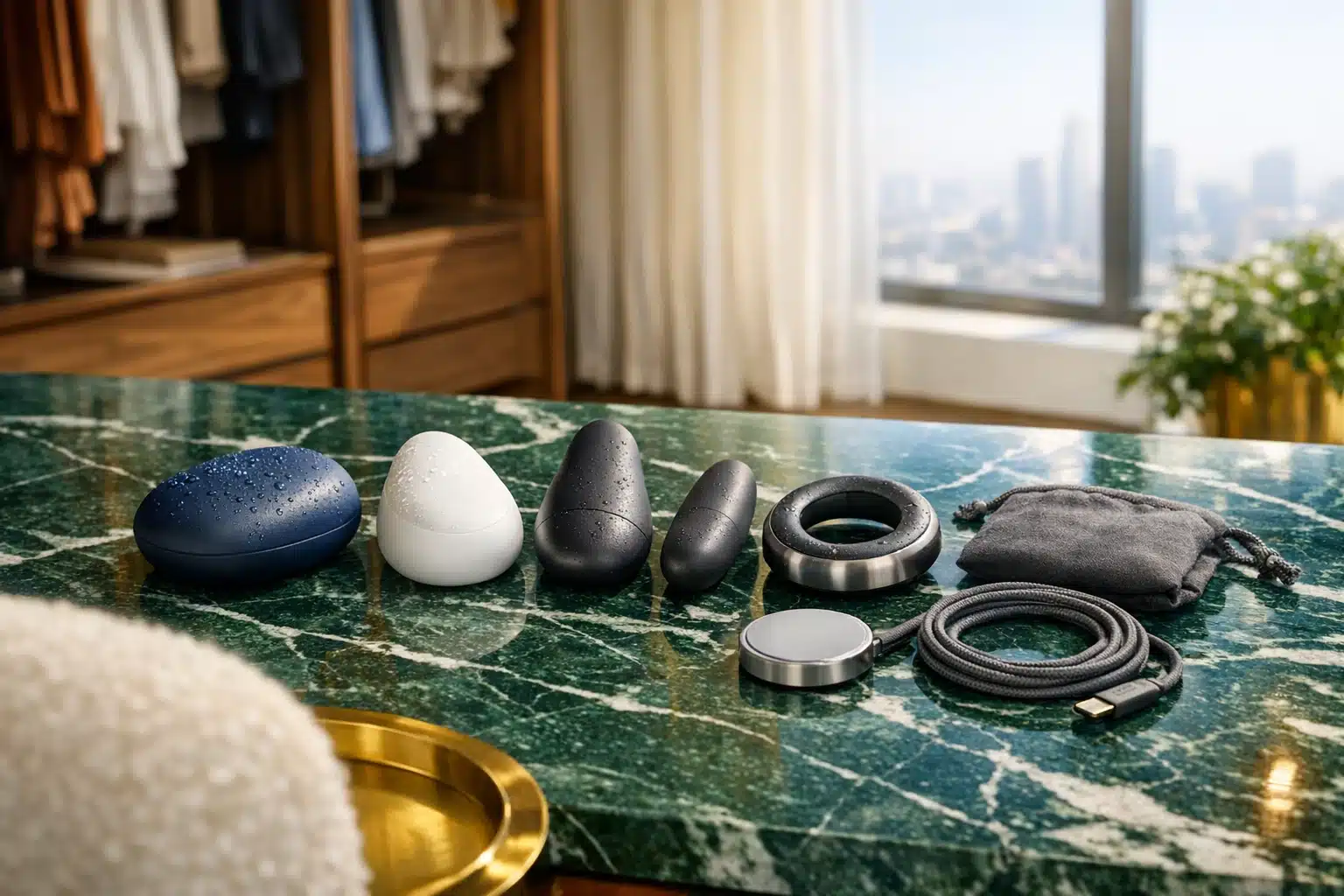
 Artificially generated image
 Ultimate Guide: Top 10 Male Intimate Devices Compared
Choosing a male intimate device today is less about novelty and more about matching smart design with everyday practicality. A well-made model should sit comfortably against the body, use dependable materials, and disappear into normal life when not in use. With marketing often louder than the facts, buyers benefit from clear standards that explain safety, motion systems, noise, and upkeep. This guide sorts those details into a usable framework so you can compare options without guessing.
Outline
– Material safety and body-contact standards
– Automated motion, power delivery, and control systems
– Discreet design for privacy, storage, and travel
– Cleaning, durability, and long-term ownership costs
– A practical comparison framework for different budgets
Material Safety: What Deserves Your Attention Before Any Feature List
Material safety is the first filter because every other specification loses value if the device is unpleasant, irritating, or difficult to keep clean. In this category, the most commonly trusted exterior materials are high-quality silicone and ABS plastic. Silicone is popular because it is soft, flexible, and typically nonporous when manufactured to a good standard. ABS plastic, by contrast, feels firmer and is often used for outer shells, control panels, and structural parts because it is durable, smooth, and easier to wipe down. Both can work well, but the quality of finishing matters just as much as the label on the box.
Shoppers should be cautious with softer compounds such as TPE or TPR when the product description is vague. These materials can feel comfortable at first, yet they are often more porous and may hold odor or residue over time if not cared for carefully. That does not mean every product using them is automatically poor, but it does mean the cleaning burden is usually higher. If a listing avoids naming the material clearly, that is a stronger warning sign than any glossy product photo. Transparency is a real quality marker.
There are a few practical indicators that help separate a safer build from a risky one:
– Clear material disclosure, rather than vague phrases such as premium blend
– Smooth seams and well-finished edges with no sticky residue
– A neutral smell instead of a strong chemical odor
– Care instructions that explain cleaning and lubricant compatibility
– Packaging or manuals that identify whether removable parts can be replaced
Lubricant compatibility also belongs in the safety conversation. Water-based lubricant is usually the easiest recommendation because it works with the broadest range of body-contact materials. Silicone-based lubricant can sometimes affect softer silicone surfaces, especially if the finish is delicate, so users should always check the manufacturer guidance first. Another overlooked factor is temperature behavior. Firmer plastics may feel cool initially, while silicone tends to warm more gradually, which can influence comfort during longer sessions.
The smartest approach is simple: read the material list before reading the feature list. A quieter motor or smarter app does not compensate for a surface that degrades quickly, traps residue, or creates uncertainty about what actually touches the skin. In a category built on personal comfort, reliable construction is not a bonus feature. It is the foundation that makes every other design choice worth considering.
Automated Motion: How Smart Features, Motors, and Controls Change the Experience
Automated motion is where modern devices try hardest to distinguish themselves, yet this is also where comparison gets messy. Feature lists can sound impressive because they stack terms like pulsation, oscillation, thrusting, sync mode, adaptive pressure, and app control into one crowded paragraph. In practice, the useful question is not how many patterns exist, but how well the device delivers consistent movement without excess noise, awkward pauses, or rapid battery drain. A shorter list of well-tuned functions often outperforms an overloaded menu of mediocre ones.
Motor quality matters more than pattern count. A strong motor should start smoothly, maintain output under light pressure, and avoid rattling the housing. Some devices feel powerful at the highest setting on paper but become unpleasantly buzzy instead of controlled. Others offer more measured motion that feels refined because the internal mechanics are better balanced. This is why thoughtful reviews often mention stall resistance, noise character, and transition smoothness rather than simply calling a device powerful.
When comparing automated systems, it helps to think in three groups:
– Basic automation: preset speed levels and familiar pulse modes
– Responsive automation: pressure-sensitive adjustments, memory settings, or timed sequences
– Connected automation: app-based controls, customizable routines, and remote updates
Connected features can be useful, though they should never be treated as proof of superiority by themselves. An app may improve convenience if it allows precise control, creates simpler motion profiles, or updates firmware to fix bugs. It becomes less valuable when it adds pairing problems, privacy concerns, or a clumsy interface. Buyers who prefer plug-and-play simplicity may actually get a better experience from a device with on-body buttons that are easy to identify by touch.
Battery performance is another area where marketing can oversimplify reality. A large battery figure looks nice, but runtime depends on motor load, heating features, wireless connectivity, and the intensity level used most often. Many quality devices land in the range of roughly one to two hours per charge under normal use, though real-world variation is wide. Magnetic charging docks can be convenient, but only if the connection is strong and the charging port remains corrosion-resistant after cleaning.
Think of automated motion like the transmission in a good car. You notice it most when it performs badly. The best systems feel composed, intuitive, and quiet enough not to dominate the room. Rather than chasing the longest feature sheet, look for motion that feels deliberate, controls that make sense without a manual nearby, and a power system that supports your routine instead of interrupting it.
Discreet Design: Privacy, Noise Control, and Everyday Usability
Discreet design is often treated like a cosmetic extra, but for many buyers it is one of the deciding factors. Privacy is not only about appearance. It includes how the device sounds, how it charges, how it stores, and whether it attracts attention if someone sees the packaging, cable, or travel case. A product can be technically impressive and still fail this test if it looks theatrical, lights up unnecessarily, or requires a storage setup that feels more awkward than practical.
The most thoughtful designs usually take a calmer route. Neutral colors, compact proportions, and clean shapes reduce visual drama while making storage easier. A soft-touch exterior or matte shell can help the device feel more premium without announcing itself. Quiet operation is equally important. Sound quality matters more than raw volume because a low, smooth hum is less disruptive than a sharp mechanical chatter. Housing materials, motor isolation, and fit between parts all influence this. If a device vibrates its casing more than its contact surface, the design work likely stopped too soon.
Explore the best in male wellness: a hype-free guide to top-rated devices, comparing smart tech, comfort, and performance for every budget.
That sentence captures the right mindset because discreet design is where hype often collides with daily reality. A hidden charging port, a travel lock, or a washable storage pouch may sound minor, yet these details shape whether ownership feels effortless or mildly irritating every time. Good privacy-oriented design often includes:
– Packaging that is plain and not overly descriptive
– Controls that do not flash brightly in a dark room
– Travel lock functions to prevent accidental activation
– Storage cases or bags that protect surfaces from dust
– Cables and charging methods that are easy to replace if lost
For people sharing living space, discreet design also means speed and simplicity. If setup requires a long calibration process or an app that demands repeated permissions, convenience drops quickly. On the other hand, a well-designed device can be cleaned, dried, stored, and recharged within a few minutes. That quiet efficiency matters more over six months than a dramatic unboxing ever will.
There is also an emotional side to privacy. Products that look considered rather than sensational can reduce self-consciousness for first-time buyers. Instead of feeling like an awkward novelty hidden at the back of a drawer, the device becomes another personal-care item with a defined purpose. That shift may sound subtle, but it is powerful. Design does not merely shape what you see. It shapes how easily the product fits into real life.
Cleaning, Durability, and Ownership Costs Beyond the Checkout Page
A smart purchase is not only about how a device performs during its first week. Long-term satisfaction depends heavily on how easy it is to clean, how well it withstands repeated use, and how much upkeep it quietly demands over time. This is where many buying guides become too shallow, because they focus on launch-day impressions instead of month-three realities. If a product is difficult to dry properly, uses fragile charging pins, or collects residue in hard-to-reach seams, the initial excitement tends to fade quickly.
Cleaning starts with structure. Devices with sealed exteriors, removable inserts, and smooth interior contours are usually easier to maintain than those with deep ridges, exposed fabric-like surfaces, or poorly designed internal corners. Water resistance claims deserve scrutiny here. Splash-resistant is not the same as fully washable under running water, and waterproof is only useful when the charging port and seals are designed well enough to survive repeated exposure. If an item cites an IP rating, that gives shoppers a more concrete clue than a vague promise of being shower friendly.
Durability is shaped by both materials and engineering choices. A firm shell that does not flex excessively can protect motors and moving assemblies. Silicone contact points should resist tearing, especially around entry edges and removable sleeves. Battery health also matters because sealed rechargeable devices have a natural lifespan. Over time, even well-built batteries lose capacity. That is not unusual, but better products manage it with stable charging behavior, sensible heat control, and electronics that do not drain heavily in standby mode.
Ownership costs can include much more than the listed price:
– Replacement sleeves or inserts if the design uses them
– Cleaning solutions and storage pouches
– Shipping delays or fees for spare parts
– Warranty limitations on batteries and wear items
– The time cost of maintenance after each use
Customer support often becomes the hidden dividing line between acceptable and excellent. A clear manual, responsive support team, and straightforward warranty language can make a mid-priced device feel like a smarter investment than a premium model with confusing policies. It is also worth checking whether the company offers replacement accessories instead of forcing a full repurchase when one component wears out.
Think of maintenance as part of comfort, not a chore that sits outside the product experience. A device that cleans easily, dries safely, and stores without fuss is more likely to remain part of a routine. Reliability is not glamorous, but in wellness products it often becomes the feature users appreciate most once the novelty has worn off.
Conclusion: How to Compare Options Sensibly Across Budgets
The most useful comparison framework is not built around flashy rankings. It is built around the question of what kind of ownership experience you want. Entry-level devices can make sense for a first purchase if the materials are clearly disclosed, the controls are straightforward, and the product is easy to maintain. Mid-range models often provide the strongest balance because they improve noise control, material quality, and motor refinement without charging a heavy premium for experimental extras. High-end options may justify their price when they combine excellent build quality, quieter engineering, better ergonomic design, and smarter automation that genuinely improves usability rather than simply inflating the spec sheet.
If you are comparing products side by side, give each one a simple score in five areas:
– Body-safe construction and transparent materials
– Motion quality and control logic
– Noise level and discreet storage
– Cleaning effort and likely longevity
– Overall value at its price point
This method helps cut through branding language. A lower-priced model with silicone contact surfaces, dependable buttons, and easy cleanup may outrank a more expensive device that adds unreliable app features or awkward maintenance. Likewise, a premium device should earn its position through polish, durability, and user-centered design, not through theatrical marketing vocabulary. Price alone does not define quality. It only changes the standard the product must meet.
For readers who want confidence rather than confusion, the key takeaway is straightforward. Start with safety, move to function, then judge privacy and upkeep before thinking about luxury extras. Someone living with roommates may place discreet storage and quiet operation above every advanced mode. Another buyer may care most about automated motion that reduces manual adjustment. A frequent traveler may value compact size, secure charging, and a reliable lockout system. The right choice depends on routine, not trend.
In the end, the best device is the one that feels well made, behaves predictably, and fits your life without friction. That is the standard worth using whether your budget is modest or generous. When you compare male wellness devices through the lens of material safety, automated motion, and discreet design, the market becomes far easier to navigate. You do not need louder promises. You need clearer criteria, and now you have them.